

Last updated: Apr 10, 2026
The Complete Guide to a Low-Maintenance Front Yard That Actually Stays Put

Share


Published on: March 20, 2026
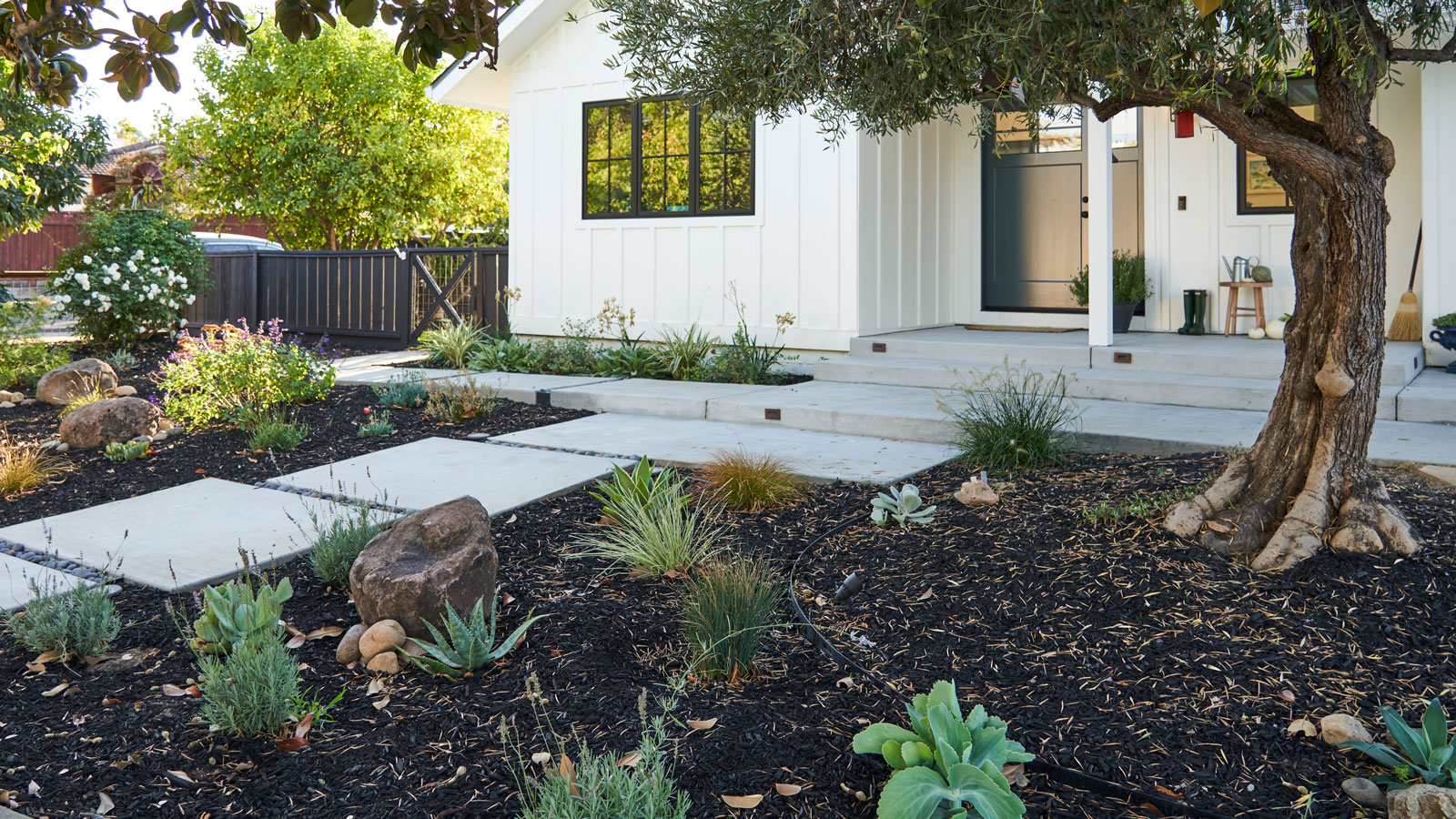
The Yard That Looks Good Monday and Bad by Friday

Every homeowner knows the feeling. You finish the yard on Saturday. By Wednesday, the gravel shifted, the mulch thinned, and the edges look soft. By Friday, it looks like nobody maintains it.
A truly low-maintenance front yard isn’t about choosing the right stone or the right plants. It’s about locking the two surfaces that move the most: rock paths and mulch beds.
The Two Surfaces That Cause 90% of the Maintenance

Gravel and decorative stone — pathways, borders, tree rings, paver joints. It shifts, scatters, and migrates into the lawn after every storm, every dog run, every kid’s bike ride. A single application of Rock Glue Max locks this gravel in place for 12–24 months. Water drains through. The finish stays invisible. The edges stay crisp.
Mulch — garden beds, tree rings, foundation plantings. It washes out, thins, and leaves bare spots by midsummer. Weeds push through the gaps. Mulch Glue Max bonds between mulch pieces, locking them in place and helping reduce weed growth for 12–24 months.
Everything else — plants, shrubs, hardscape — mostly stays where you put it. The rock and mulch don’t. That’s where your weekends go.
The Low-Maintenance Secret: Lock Both Surfaces

Bond both surfaces after installation. A spray-on bonding agent creates an invisible mesh that holds material in place while letting water drain through.
For gravel: spray the paths, borders, and tree rings. Material stops migrating. Edges stay crisp.
For mulch: spray the beds. Material stops washing out. Bare spots stop forming. Weed growth slows because gaps close.
One afternoon of work. Both surfaces locked. Months of maintenance eliminated.
What Most People Get Wrong

Mistake 1: Using a product that seals the surface. Epoxy and concrete alternatives block water entirely, causing pooling and runoff. The bonding agent must be 100% water-permeable.
Mistake 2: Using a product with unknown ingredients. If you have pets, kids, or garden beds nearby, VOCs and PFAS matter. Most imported products don’t disclose what’s in them.
Mistake 3: Only doing one coat. Two coats creates a significantly stronger bond. One coat is better than none, but two coats is the standard for lasting hold.
Why PetraMax? Safety, Transparency, and Origin.

Not all bonding products are equal. Most landscaping adhesives on the market are imported from overseas with no disclosed ingredient list, no safety testing, and no customer support. You have no idea what’s going into the yard where your family and pets spend time every day.
PetraMax is different. Every bottle is made in the USA at facilities with full quality control. Every batch is tested at Mid South Lab, an independent third-party laboratory in the United States. The formula is 100% transparent: zero VOCs, zero PFAS, zero formaldehyde, zero toluene. Non-toxic once cured.
"Is this safe for pets?" is the #2 most-asked question we see every week. The answer: yes, once cured. Rock Glue Max and Mulch Glue Max are both pet safe once the 24–36 hour curing period is complete. No off-gassing. No residue on paws. No harmful chemicals lingering where your dog sleeps, walks, and plays.
"How does water pass through?" is the #1 question. Both products are 100% water-permeable. They create a flexible mesh between pieces — not a solid seal. Rain, irrigation, and snowmelt drain through normally. No pooling. No flooding. No runoff problems.
Kid safe once cured. Safe for bare feet. No puddles to slip on because drainage is unaffected. Zero harsh fumes during or after application.
USA-based customer support available 7 days a week. If something isn’t right, real people in America answer the phone.
Your Low-Maintenance Checklist
Lay your gravel and mulch exactly how you want them.
Clean surfaces — remove debris, leaves, dirt.
Spray Rock Glue Max on all rock surfaces (2 coats).
Spray Mulch Glue Max on all mulch beds (2 coats).
Let cure 24–36 hours.
Don’t touch your yard again for 12–24 months. That’s the whole plan.


